
When you think about how your business finds its next customer, does it feel more like tending a garden or heading out on a hunt? You might be building something that brings people to you over time, or you might be going out to find them whenever you need more business.
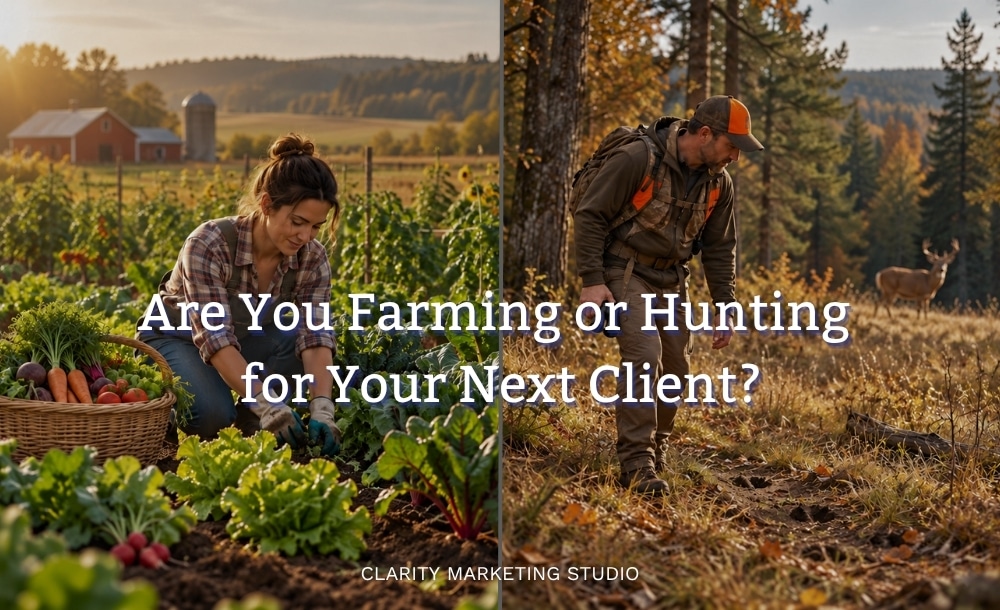
Farming and hunting are useful ways to picture inbound and outbound marketing.
- Inbound is the farming side, where you grow a place people can find when they need you.
- Outbound is the hunting side, where you actively seek out potential customers.
Both can put food on the table, but they ask different things of you.
The Farmer
A farmer puts in work long before there’s anything to harvest. Preparing the ground, planting, and tending the crop all take time, with the expectation that the care invested today will produce something later.
There’s a similar rhythm to building your business online. The work may not bring a phone call that afternoon, but you’re giving people more ways to discover you and more reasons to feel comfortable getting in touch.
Prepare the Soil
Even good seeds struggle in poor soil. For a business, that soil is the foundation people find when they look you up: your website, your Google Business Profile, your reviews, and the information that explains what you do.
If someone arrives at your website and can’t tell whether you offer the service they need or work in their area, there isn’t much room for that interest to grow. When the information is clear and the website is easy to use, they have a better chance to get to know you.
Plant Answers to Real Questions
The questions you hear from customers are often good seeds for something useful.
A homeowner wants to know whether a cracked driveway can be repaired. A first-time buyer wonders what happens after an offer is accepted. Someone planning an RV trip isn’t sure which type of site will fit their rig.
An article or a helpful page that answers those questions gives people something they were already looking for. They may arrive looking for an answer and leave knowing a little more about your business, too.
Not every visitor will become a customer, just as not every seed produces a crop. But each useful answer creates another opportunity for the right person to find you.
Tend What You’ve Planted
Anyone who has left a garden alone for a few weeks knows how quickly things change. Your website needs attention for much the same reason: information gets old, services change, and something that made sense a year ago may need another look.
The good part is that you’re caring for something you already have. An article that continues to answer a common question can help people for years, with updates along the way. As that collection grows, you have more working for you than you did when you started.
Give the Harvest Time
It would be nice if planting today meant harvesting tomorrow, especially when business is slow. But farming follows its own schedule, and people make decisions on theirs.
Someone may read your information months before they need your service. When the time comes, they may remember the business that helped them understand their options. That’s part of the value of having something useful growing before you need the next customer.
The Hunter
A hunter goes out looking for an opportunity rather than waiting for something to grow. In business, that might mean sending postcards, making calls, or placing an ad to introduce your services to more people.
This can be useful when there’s a current need, such as openings in your work schedule, apartments available to lease, or RV sites you’d like to fill before a holiday.
Choose Where to Look
A hunter doesn’t expect to find the same opportunities everywhere. Where you look matters, and the same is true when you’re trying to reach potential customers.
A paving company’s postcard has a better chance of being useful when it reaches homeowners in an area the company serves. Whether it leads to a call also depends on what’s happening at that home. Someone who has been putting off a driveway repair may welcome the reminder, while a neighbor with a new driveway has little reason to respond.
Reach People Who Weren’t Expecting You
Unlike someone who finds your article while looking for an answer, the person receiving your postcard may simply be sorting the mail. A radio ad reaches someone during their drive, and a phone call arrives in the middle of their day.
Sometimes that interruption is welcome because the message happens to fit a need. Other times, it passes by without much notice. That’s part of hunting: you can choose where to look, but you can’t know that every person you reach will be ready.
Plan for the Next Hunt
A successful hunt can meet today’s need, but there will be another day to think about. Once the postcards have been delivered or the ad stops running, reaching more people usually means another mailing, another ad, or more calls.
Some people may remember you and respond later, so the value doesn’t necessarily disappear when you stop. But the activity needs to be repeated if you want to keep putting your message in front of new people.
Farming vs. Hunting at a Glance
| Inbound Marketing: The Farmer | Outbound Marketing: The Hunter | |
|---|---|---|
| Approach | Grows a place customers come to | Goes out and finds customers |
| Common tactics | Website content, SEO, blogging, social media, opt-in newsletters | Emails, postcards, cold calls, billboards, radio and TV ads |
| Effort | More work up front, followed by ongoing care | Repeated effort to keep reaching people |
| Relationship | People choose to find you and engage | Reaches people who weren’t looking for you |
| Timing | Runs on your customer’s schedule | Runs on your schedule |
| Results | Build over time with regular care, without starting from scratch for every new customer | Gets your message out quickly, but results stop when your outreach or advertising stops |
There’s Room for Both
Farming and hunting can support each other. A postcard may introduce someone to your business, but your website is often where they go to decide whether to call. The effort you’ve put into clear information, helpful answers, and examples of your work gives that introduction somewhere useful to lead.
An RV park might advertise available sites for an upcoming weekend while its website helps visitors picture their stay. A contractor might mail postcards during a slower month while helpful articles continue bringing homeowners to the site.
Having a field growing doesn’t mean you’ll never go hunting. It means every meal doesn’t depend on the next hunt.
What’s Growing While You’re Busy?
For many business owners, the appeal of farming is having something to build on. The work you did last month can still be useful this month, and the information you add today can help someone you haven’t met yet.
It takes care and patience, but there’s relief in knowing your business has a place where people can find answers and get to know you while you’re busy taking care of customers.
At Clarity Marketing Studio, we help tend that field through clear websites, helpful content, and ongoing care for your online presence. You know your business, and we help more people find it and understand what you have to offer.
About the Author: Linda Phillips Blue
